

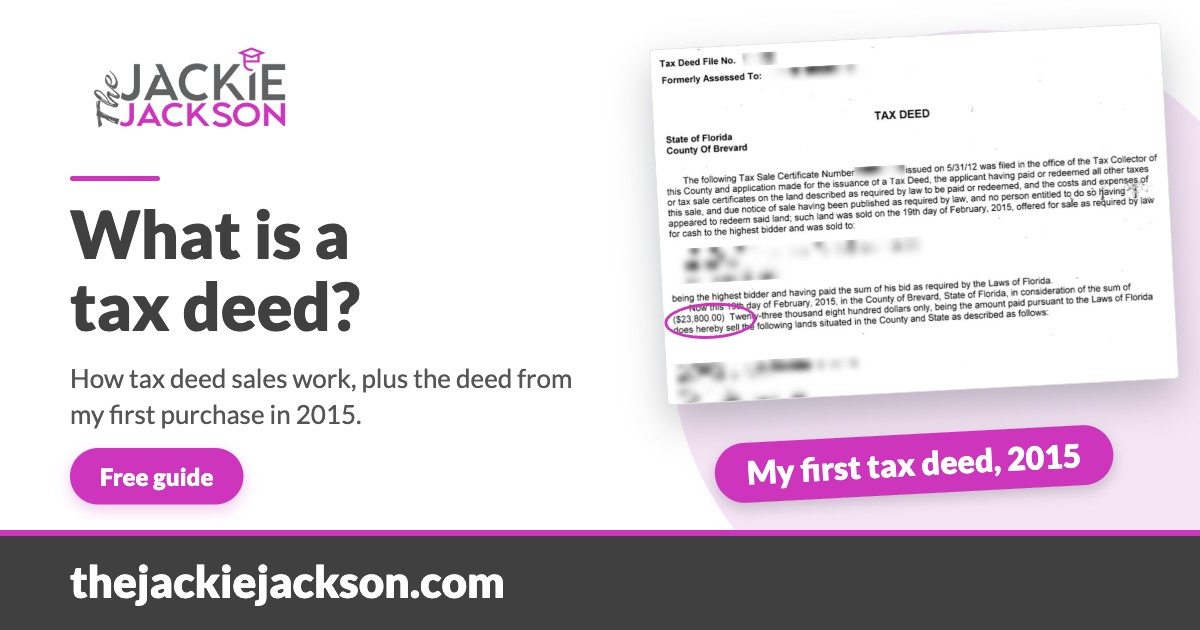
A tax deed is the legal document that makes you the owner of a property the county sold because the owner didn’t pay their real estate property taxes. You get it by winning at the county’s tax deed sale, which most people call a tax deed auction.
I’m Jackie Jackson. I’ve invested in real estate since 2006, and through my G.E.N.I.U.S. Method™, I’ve taught over 34,000 people how to find, research, and buy tax deeds and tax liens in all 50 states. Below is how the sale works and what I look at before I ever place a bid on a property.
How does a tax deed sale work?
When property taxes go unpaid long enough, the county sells the property to collect the past-due taxes. Each state has its own steps, but the process is similar. The county posts the tax sale list, bidders register for the auction and pay a deposit, and the bidding opens at what’s owed: back taxes, interest, and fees. The highest bidder wins and pays the balance by the county’s deadline.
If the winning bid is more than what was owed, the extra money is called surplus funds, or overages. The former owner and some lienholders can claim it.
Is a tax deed a real deed?
Yes. A tax deed really does transfer ownership. It’s not the same as the warranty deed you’d get in a regular home sale, though. Nobody promises you a clean title, so a lot of tax deed properties come with a “cloud” on the title, meaning old claims or liens that may still show up in the records.
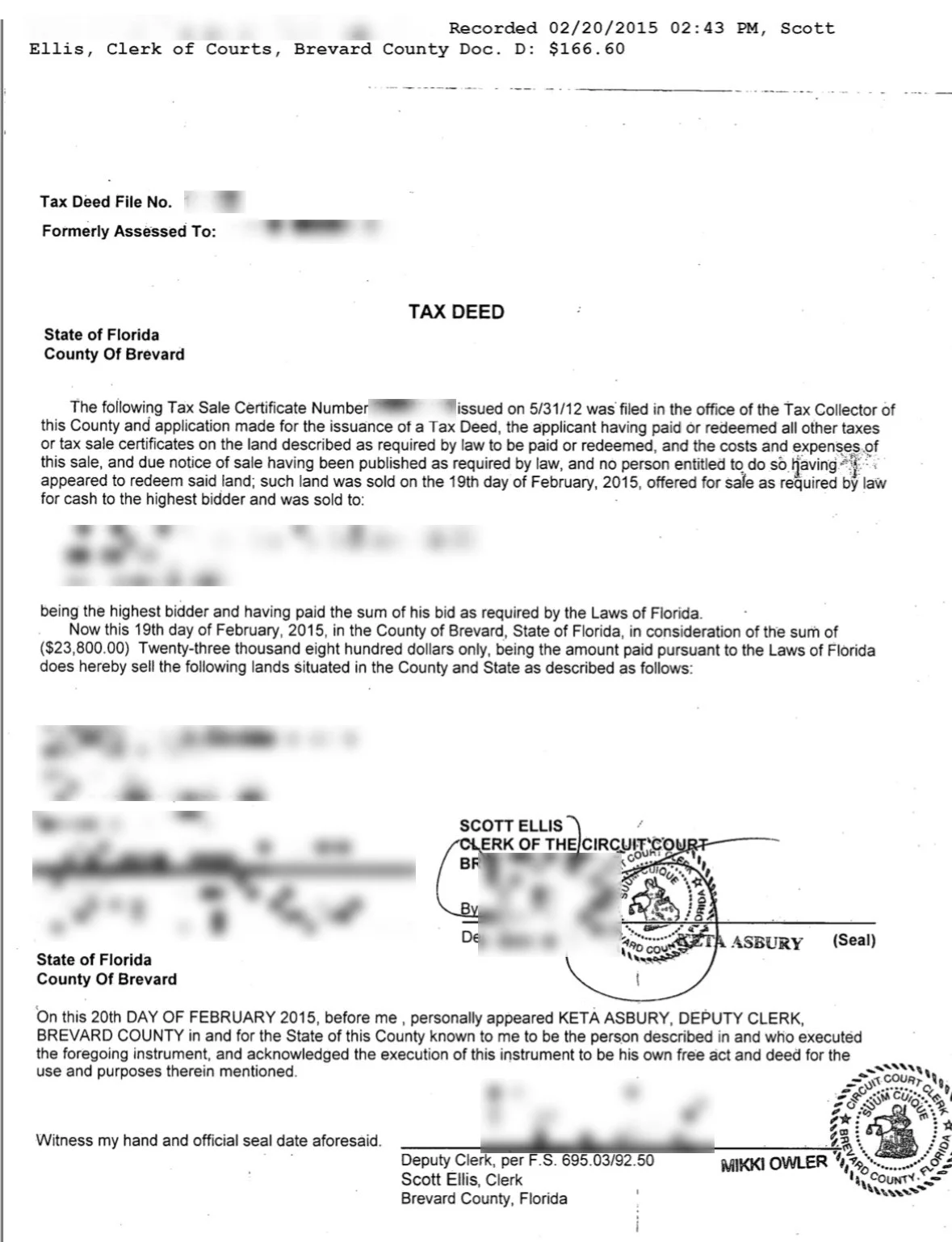
My first tax deed, from a Brevard County, Florida sale on February 19, 2015. I blurred the private details. Click the image to see it larger.
If you plan to sell or refinance later, a title company will usually want the title cleared first. Buyers handle that one of 2 ways:
- A quiet title action. You file a court case, and when it’s over, a judge has confirmed the property is yours free and clear.
- A title certification, a review of the tax deed process that some title companies accept instead of a quiet title lawsuit. Some states don’t allow it, so ask a title company in your state before you count on it.
Tax deed vs. tax lien: how they’re different
With a tax lien, you’re buying the county’s claim for the unpaid taxes, and you don’t own the property. When the owner pays what they owe plus interest, that money comes to you as the tax lien certificate holder. A tax deed is the property itself. Florida does both: it sells tax lien certificates first and holds tax deed sales later. My How to Invest in Tax Liens guide walks through the lien investing process step by step.
What can you do with a tax deed property?
Once you know how you’ll clear the title, here’s what you can do with it:
- Fix it up, then sell it on the open market.
- Rent it out.
- Sell it as-is to another investor.
- For vacant land, build on it or sell it to someone like a land developer.
Whatever the plan, do the research before you bid. Cheap doesn’t mean it’s a deal.
Before you bid
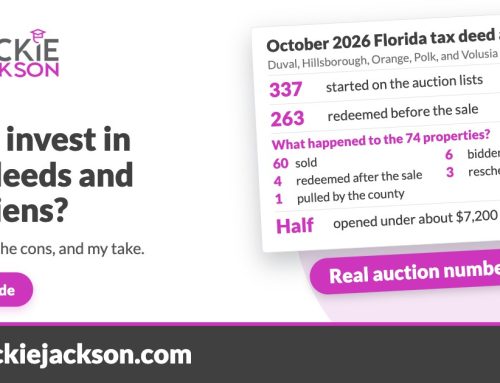
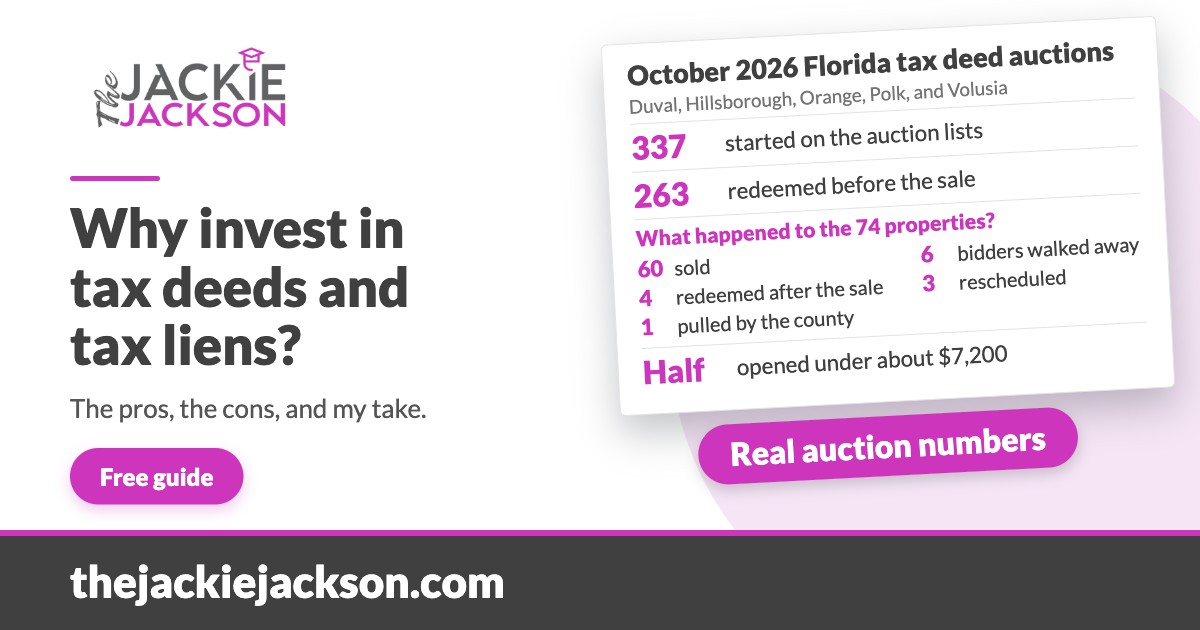
Sometimes you can buy a property at a tax deed sale for well under retail value. But there are real risks too: liens that survive the sale, someone who may still be living in the house, a condition you can’t inspect, and, in some tax deed redemption states like Georgia and Texas, a time period when the former owner can still buy it back. I go through the pros and cons in Why Invest in Tax Deeds and Tax Liens.
Rules vary by state and county, so check the county’s current terms before you bid. This is general education, not legal advice.
Questions about tax deeds
If I buy a tax deed, do I own the property?
In most tax deed states, yes, once the county issues and records the deed in your name. A handful of states, like Georgia and Texas, use a redeemable deed, where the former owner can still buy the property back for a set time after the sale by paying you back plus a penalty set by state law. Until that time runs out, your ownership under a redeemable deed can still be undone. However, in tax deed states that don’t have a redemption period after the tax deed is purchased, buyers get ownership right away. If someone is still living there, you follow your state’s process to get possession.
What is a tax deed state?
It’s a state that sells the property itself at the tax sale, instead of selling a tax lien certificate. Some states use both. My States Cheatsheet shows which kind of sale each state holds.
What is a tax deed application?
In Florida, it’s the request a tax certificate holder files with the tax collector to send the property to a tax deed sale. The holder can file a tax deed application once 2 years have passed since April 1 of the year the certificate was issued. The owner can still redeem until the tax deed is issued.
What is a tax deed auction?
It’s the public sale where the county sells the property for the unpaid taxes. Bidding starts at what’s owed for past-due real estate taxes, fees, and interest. A lot of counties hold these auctions online now. My FAQ explains how to find them.






Leave A Comment
You must be logged in to post a comment.